Problem Statement
Sustainable fashion brands often have a strong story, thoughtful product choices, and a clear point of view, but those strengths do not automatically translate into organic visibility or sales. Customers may search for specific clothing styles, fabrics, fits, or buying considerations without discovering the brand. Meanwhile, collection pages may be poorly structured, product descriptions may lack useful detail, and sustainability messaging may not answer customer questions. SEO needs to connect what the brand offers with what shoppers actually search for, while communicating product value accurately and helping visitors find the right products.
Why Sustainable Fashion Brands Need a Different Content Approach
Sustainable fashion shoppers may consider design, price, fit, fabric, durability, care, production practices, and the brand’s environmental claims. The importance of each factor varies by customer and product category.
A brand that only talks about sustainability may leave practical buying questions unanswered. Equally, a brand that focuses only on product keywords may miss opportunities to explain what makes its products different.
SEO for Apparel & Fashion brands should connect both sides: help shoppers discover relevant products and provide accurate information that supports their decision.
For sustainable brands, credibility matters. Terms such as eco-friendly, ethical, organic, recycled, or responsibly made should be used only when they accurately describe the product or business and can be substantiated where necessary.
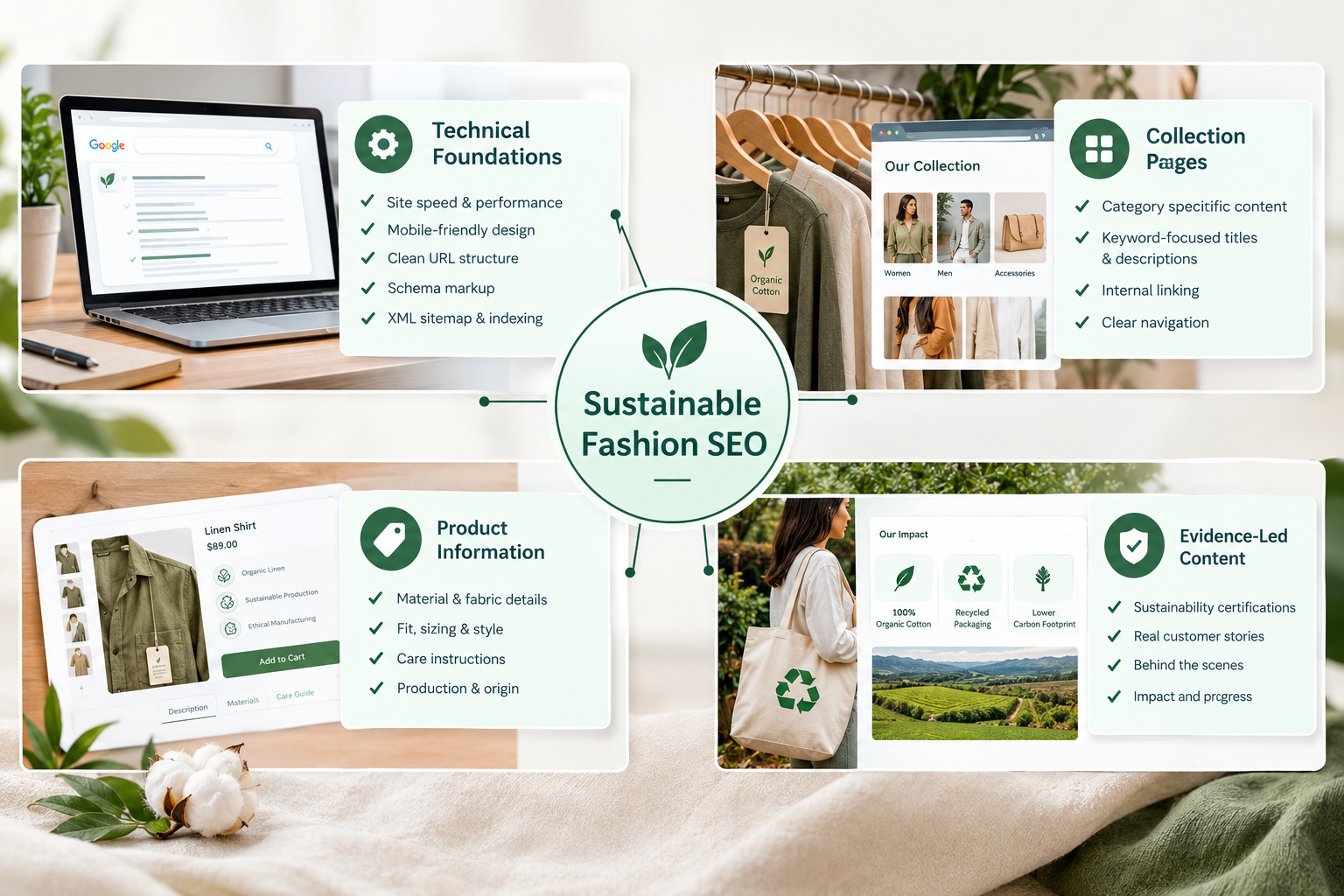
Five Actions Sustainable Fashion Brands Should Prioritise
1. Map Search Intent to the Right Collection and Product Pages
The first task is to understand how potential customers search for the products you sell.
Queries may relate to clothing type, fit, fabric, occasion, style, or a particular product feature. Search behaviour will differ between a brand selling everyday essentials and one focused on occasion wear, activewear, or premium sustainable apparel.
Review keyword data, Search Console queries where available, competitor category structures, and your own product catalogue. Group related searches by intent and assign them to the most suitable pages.
For example, a broad query about linen clothing may suit a collection page if the brand has a relevant range. A specific product query should generally lead to the corresponding product page.
Avoid creating a separate page for every keyword variation. Similar searches can often be addressed by one well-developed page. Too many overlapping pages can create duplication and make the site harder to maintain.
The objective is to help search engines and customers understand which page best answers a particular need.
2. Improve Collection Pages Before Publishing More Blog Content
Collection pages often sit close to the purchase decision. They help shoppers browse products by category and provide search engines with a clear view of the available range.
Review whether each important collection has a descriptive title, a clear heading, relevant metadata, useful product listings, and logical internal links.
Where additional copy would help customers, explain what the collection includes, how products differ, or what shoppers should consider when choosing an item. Avoid adding long blocks of generic text simply to include keywords.
Check that collection filters and sorting options work properly, especially on Shopify stores with large catalogues. Review whether filter combinations create unnecessary crawlable URLs or duplicate page variants.
Prioritise collections with commercial relevance, available inventory, and a realistic opportunity to improve organic visibility. A smaller number of well-structured category pages may be more valuable than a large set of thin or overlapping collections.
3. Make Product Pages Useful for Both Shoppers and Search Engines
Product pages need to help shoppers understand what they are buying.
Include accurate product names, descriptions, size information, fabric composition, fit guidance, care instructions, available colours, and other relevant specifications. Explain meaningful product features rather than relying entirely on generic descriptions shared across the catalogue.
For sustainable fashion, be especially careful with material and environmental claims. If a product uses recycled fibres or certified materials, describe the claim accurately and ensure supporting documentation is available where required. Do not assume that one sustainable attribute makes every aspect of a product environmentally preferable.
Optimise product titles, metadata, image alt text where appropriate, and contextual internal links. Use clear product imagery and maintain consistent product information across the website and other sales channels.
Review product availability and discontinued items as well. A page that remains indexed but offers no useful next step can frustrate shoppers. Decide whether it should remain available, point users to alternatives, or be handled differently based on its search value and the business’s needs.
4. Fix Technical SEO Issues That Make Discovery Harder
Technical issues can limit the value of otherwise strong content.
Review crawlability, indexation, redirects, canonical tags, XML sitemaps, mobile usability, page speed, and internal linking. For ecommerce stores, pay particular attention to collection filters, sorting parameters, pagination, and duplicate product URLs.
As part of your technical SEO checklist, check whether important products and collections are accessible through logical navigation. A page that exists in the sitemap but is difficult to reach from relevant category pages may not provide the best experience for customers or search engines.
Structured data can help search engines interpret product information when implemented correctly. Ensure that product details, prices, availability, and other eligible information are consistent with what users see on the page.
Do not treat a technical audit as a list of equally urgent errors. Prioritise issues according to their impact on important pages, the number of URLs affected, and the effort required to resolve them.
Technical SEO should make product discovery more reliable, not become a never-ending list of minor fixes.
5. Build Content Around Real Customer Questions and Verifiable Sustainability Information
Content can help sustainable fashion brands reach shoppers before they know which product they want to buy.
Potential topics include fabric comparisons, clothing care, garment longevity, fit guidance, capsule wardrobe planning, and how to evaluate product material claims. Choose topics based on customer questions, relevant search demand, and the brand’s actual expertise.
For example, a guide comparing two fabrics should explain their relevant characteristics and limitations instead of declaring one universally superior. A care guide should provide practical instructions that reflect the garments being sold.
Sustainability content deserves particular attention. Broad claims such as planet-friendly or completely sustainable can be misleading if they are not clearly defined and supported. Prefer specific explanations about materials, production processes, certifications, repair options, or care practices when those details are verified.
Connect informational content with relevant collections and products where the link helps the reader. Do not turn every article into a sales pitch. Useful education can build trust and help customers make better-informed choices.
If you are creating content using AI tools, check out our latest guide on SEO Guidelines for AI-Written Content.
How Can Fashion Brands Measure SEO Performance?
SEO for Apparel & Fashion brands should be measured through a combination of search visibility, product discovery, and commercial outcomes.
Monitor organic impressions and clicks, relevant non-branded queries, collection and product page performance, click-through rate, and indexing status. Then examine ecommerce measures such as product views, add-to-cart activity, conversion rate, and organic revenue where tracking is available.
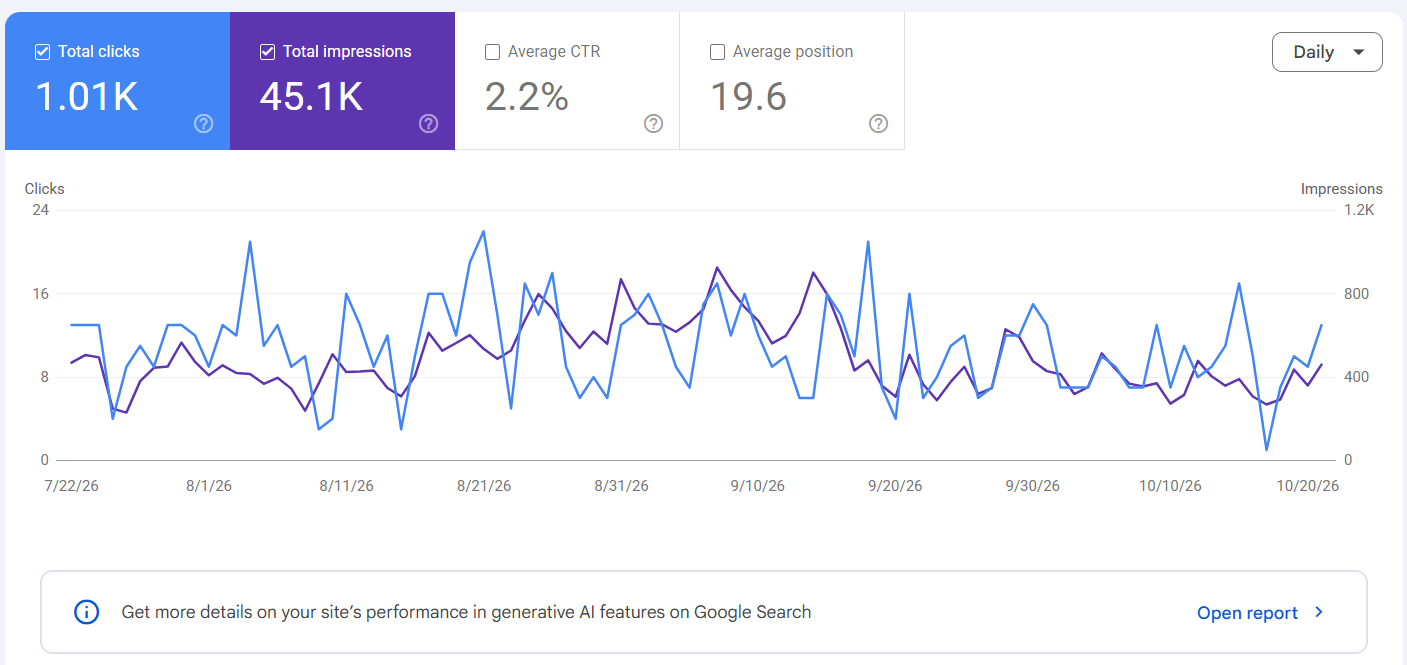
Segment results by collection, product category, and content type. Overall organic traffic can hide important differences between high-intent product traffic and informational visits.
Also account for seasonal changes, new collection launches, stock availability, and discounts. Fashion demand can shift significantly throughout the year, so changes in traffic should not automatically be attributed to SEO work.
Use the data to decide whether the next priority is improving existing pages, resolving technical issues, creating new content, or strengthening internal links.
Common SEO Mistakes Sustainable Fashion Brands Should Avoid
Several mistakes can weaken organic performance even when a brand has good products.
Publishing content without a clear purpose: Every page should answer a real question or support product discovery.
Using sustainability language without evidence: Environmental claims should be accurate, specific, and substantiated.
Ignoring collection pages: Blog content cannot compensate for important product categories that are difficult to find or poorly optimised.
Creating overlapping pages: Similar pages targeting the same intent may compete with each other and dilute maintenance effort.
Neglecting product information: Shoppers need practical details about fit, fabric, care, and availability.
Measuring traffic alone: More visitors are not necessarily better if they do not match the brand’s products or buying intent.
Why Growthify?
Growthify approaches SEO by connecting technical health, search intent, ecommerce architecture, content quality, and commercial priorities. For a sustainable fashion brand, we’d begin with the product catalogue and existing search performance, then identify which collection and product pages offer the strongest opportunities. We’d review technical barriers, improve relevant page information, and plan content around genuine customer questions. Sustainability messaging would need to reflect verified product and business information. The aim is to make the right products easier to discover while giving shoppers the details they need to make an informed purchase.