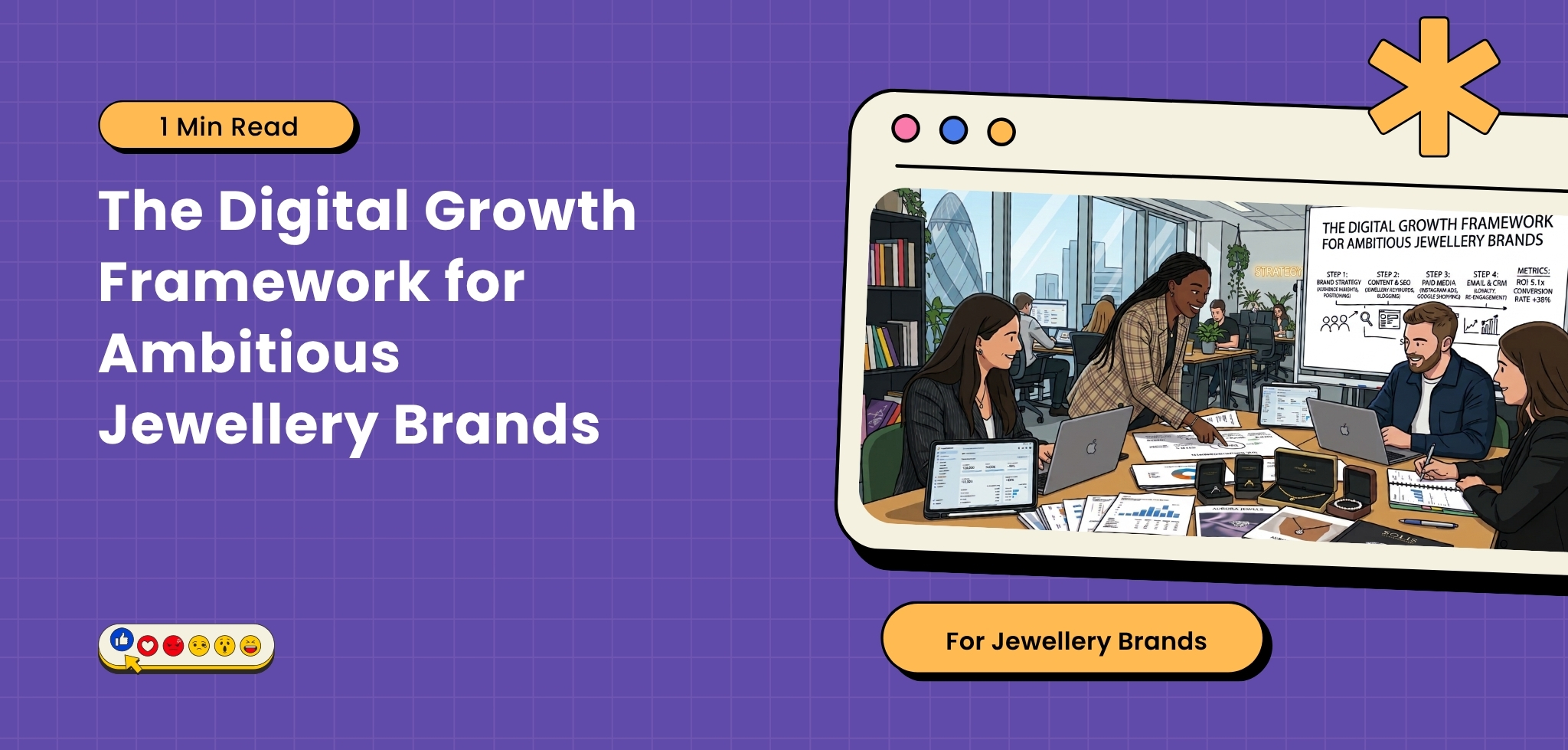
How Can Jewellery Brands Build a Digital Growth Framework That Scales?
Problem Statement
A jewellery brand can have a strong product range, attractive photography, and an active social media presence without achieving consistent online sales. Advertising costs may rise, organic traffic may remain limited, and customers may browse products without completing purchases. Understanding how to grow a jewellery brand online starts with identifying what customers value, which marketing channels influence their decisions, and where the buying journey loses potential orders. Adding more campaigns or hiring another marketer does not automatically solve these problems. Growth requires a clear strategy that connects different marketing activities to improve customer acquisition, increase conversions, and support long-term business growth.
Why Growing a Jewellery Brand Online Requires More Than More Advertising
Jewellery customers may discover a brand through social media, compare products through search, revisit a collection later, and purchase after gaining confidence in the product and seller.
This means the channel that first introduces a customer may not be the channel that receives credit for the final sale.
It also means marketing performance depends on more than campaign settings. Product pricing, margins, product information, customer trust, website experience, and inventory can all influence results.
At Growthify, we’d start by identifying the actual constraint. If the brand lacks relevant traffic, acquisition and discovery need attention. If visitors arrive but do not purchase, product pages, pricing, trust, or checkout may be the bigger issue.
The strategy should solve the problem that is limiting growth instead of adding activities simply because competitors use them.
What Should You Fix Before Scaling Your Jewellery Marketing?
1. Understand Which Products Deserve More Investment
Not every product needs the same marketing strategy.
Review product prices, margins where available, inventory, conversion history, average order value, and customer demand. Identify which products attract attention, which convert consistently, and which contribute meaningfully to the business.
For example, affordable everyday jewellery may be suitable for product-led campaigns and repeat purchase activity. Premium pieces may require stronger storytelling, more detailed product information, and a longer consideration journey.
Create clear product priorities before allocating budgets. Avoid promoting products simply because they are new or visually attractive if demand, margins, or stock availability do not support the investment.
2. Define the Customer and the Reason to Choose Your Brand
A jewellery brand needs a clear proposition beyond offering attractive designs.
Consider what distinguishes your products. It may be design, material, craftsmanship, price positioning, personalisation, styling versatility, or a particular customer need.
Use customer feedback, product reviews, search queries, and sales conversations to understand which factors influence buying decisions.
Then reflect those differences in product descriptions, creative, landing pages, and campaign messaging.
Avoid making unsupported claims about materials, sourcing, certifications, or craftsmanship. Specific and verifiable product information is more useful than generic premium language.
How to Grow a Jewellery Brand Online Through Connected Marketing Channels
3. Use Meta Ads to Test Product Stories and Creative Angles
A well-planned Meta Ads strategy for a jewellery brand can help showcase new collections, highlight styling ideas, and communicate product value through engaging visuals that attract potential customers and encourage purchases.
Develop different concepts around genuine customer motivations. For example, one advertisement might show how a piece complements everyday outfits, while another highlights a product detail or introduces a collection.
Test formats such as product demonstrations, styling videos, close-up imagery, creator-style content, and customer experiences where available and appropriate.
Measure more than engagement. Review product visits, add-to-cart actions, purchases, acquisition cost, and revenue where tracking is reliable.
A creative that generates inexpensive clicks may still be commercially weak if those visitors have little purchase intent. Use performance data to understand which messages attract relevant shoppers and inform the next round of creative development.
4. Use Google Ads to Capture Relevant Search Demand
Using Google Ads for a jewellery brand helps connect its products with shoppers actively searching for specific jewellery pieces, styles, and designs.
Search campaigns can target appropriate product and category queries. Shopping campaigns can showcase eligible products, while Performance Max may suit brands with the right catalogue, tracking setup, and campaign objectives.
Match search intent to the landing page. A shopper searching for a particular type of ring should reach a relevant collection or product page rather than a generic homepage.
Review search terms, product performance, conversion value, and acquisition costs regularly. Ensure that product prices, availability, and other feed information remain accurate.
Paid search can capture existing demand, but it cannot create a profitable business by itself. Product margins, competition, landing-page quality, and conversion rates still matter.
For campaign guidance, refer to Google Ads Help.
5. Build SEO Around Product Discovery and Buying Questions
A strong organic search presence helps jewellery businesses reach customers beyond social media. Jewellery brand SEO supports this growth by improving website visibility and helping potential buyers find relevant products and collections through Google.
Begin with the pages closest to purchase. Collection pages should have clear names, useful descriptions, relevant metadata, and logical internal links. Product pages should explain materials, dimensions, styling, care, and other verified details customers need.
Then identify informational opportunities that support the buying journey. Content about jewellery care, material differences, styling, or selecting pieces for different occasions can help answer questions before purchase.
Avoid publishing multiple articles that target nearly identical queries without a clear distinction. Every page should have a purpose and connect naturally to the relevant part of the catalogue.
SEO takes time, but it can build sustained visibility across commercial and informational searches. Measure progress through organic impressions, clicks, relevant landing-page traffic, and conversions where available.
6. Use Content Marketing to Build Trust and Brand Recall
Content marketing for jewellery brands should connect storytelling with product discovery.
Create useful content around design details, product care, styling, craftsmanship, materials, and buying considerations. Use verified product information and avoid exaggerated claims.
A strong content plan can support several channels. A styling concept may become a social video, an advertising creative, and a section of a relevant collection page. Adapt the content to each format instead of publishing identical assets everywhere.
Also consider how content supports customers after their first interaction. Product guides, frequently asked questions, and clear buying information can reduce uncertainty and help shoppers return to the website with greater confidence.
At Growthify, we’d prioritise content that serves a defined customer need and has a clear connection to product discovery, purchase consideration, or retention.
7. Improve Conversion Before Increasing Spend
When campaigns attract relevant visitors but sales remain weak, investigate the website before scaling budgets.
Review product page engagement, add-to-cart activity, checkout abandonment, mobile usability, shipping costs, payment options, and product information.
Make sure shoppers can understand pricing, materials, dimensions, delivery, and returns without searching through multiple pages.
Use customer feedback and analytics to identify likely friction points. Test improvements methodically so you can understand what changed performance.
Do not assume that a lower conversion rate always means poor advertising. The campaign may be doing its job by bringing people to the website, while the product page or checkout experience prevents them from purchasing.
8. Build Retention Around Actual Customer Behaviour
Customer acquisition is only part of growth. Existing customers may return for different designs, complementary products, gifts, or future occasions.
Use purchase history and customer preferences to identify relevant follow-up opportunities. Email, SMS, and other permitted channels can support new collection announcements, product care communication, and relevant recommendations.
Avoid sending identical promotions to every customer. A person who bought a gift may have different interests from someone who regularly purchases everyday jewellery.
Measure repeat purchase rate, returning customer revenue, and retention campaign performance where reliable data is available.
Retention should create useful reasons to return, not simply train customers to wait for discounts.
Agency vs In-House Marketing Team: Which Model Makes Sense?
An in-house team can offer strong brand knowledge, direct coordination with product and merchandising teams, and greater control over daily priorities. It can work well when the brand has sufficient workload and budget to recruit and retain the necessary specialists.
An agency can provide access to capabilities such as paid advertising, SEO, creative production, content strategy, and ecommerce optimisation without requiring every role to be hired internally.
Neither model is automatically better.
Consider a hybrid approach if the brand needs internal ownership but lacks specialist execution capacity. An internal marketing manager can own the brand strategy and priorities, while an external agency supports selected channels or projects.
Compare the full cost of each model, including salaries, software, creative production, management time, and implementation capacity. The decision should reflect the work required and the skills available, not assumptions about agencies or internal teams.
How Should Jewellery Brands Measure Growth?
Use a reporting framework that connects marketing activity to business performance.
- Customer acquisition cost: How much does it cost to acquire a customer under your chosen measurement method?
- ROAS: How much attributed revenue does each unit of advertising spend generate?
- Conversion rate: How effectively does the website turn visits into orders?
- Average order value: How much revenue does a typical order generate?
- Contribution margin: How much remains after relevant variable costs?
- Organic search performance: Are relevant product and category pages gaining visibility and clicks?
- New customer revenue: Are marketing activities bringing in new buyers?
- Repeat purchase rate: Are existing customers returning?
Review results by product category and channel where the data supports it. Keep attribution settings consistent and compare advertising reports with ecommerce data.
A rise in attributed revenue does not automatically indicate improved profitability. Discounts, returns, fulfilment expenses, and changes in product mix can all affect the commercial outcome.
What Should You Look for in a Jewellery Growth Partner?
When deciding how to grow a jewellery brand online, evaluate whether a prospective agency can connect strategy with execution.
Ask how it will prioritise products, develop creative concepts, structure campaigns, improve product discovery, and measure performance. Request relevant case studies and confirm what work was actually completed.
The partner should explain assumptions, identify constraints, and distinguish between activities it can execute directly and recommendations that require your team.
Avoid choosing an agency based only on a promised ROAS or a long list of services. The value lies in how effectively the team identifies problems, tests solutions, and uses evidence to guide decisions.
Why Growthify?
Growthify connects Meta Ads, Google Ads, performance marketing, creative services, content marketing, e-commerce optimisation, and UGC services for jewellery brands, aligning each service with their commercial goals. We’d begin by understanding your products, margins, customer journey, and existing performance before deciding where to invest. The strategy may prioritise creative testing, search demand, product-page improvements, organic discovery, or retention, depending on the constraints identified. Rather than treating every channel as a separate activity, the focus is on using evidence to improve customer acquisition and conversion while keeping business outcomes at the centre of decisions.