
Problem Statement
Kidswear brands often have attractive collections but struggle to explain why parents should choose them over competing products. Product images alone may not answer questions about sizing, fabric, comfort, quality, care or value. Meanwhile, publishing random blogs and social posts can consume time without contributing to product discovery or sales. A useful content strategy needs to connect what parents search for, what they want to understand before purchasing, and what the brand needs to communicate to earn their confidence.
Why Content Marketing for Kidswear Brands Needs a Different Approach
Selling kidswear involves more than showing attractive outfits.
Parents may be buying everyday clothing, occasion wear, festive outfits, newborn essentials or gifts. Their expectations change depending on the product, the child’s age and the occasion.
A parent shopping for everyday clothes may prioritise comfort, durability and ease of washing. Someone shopping for a birthday outfit may care more about design, fit and appearance. A person buying a gift may need clear age or size guidance before deciding.
That means the content needs to reflect different buying situations.
For brands exploring how to grow kidswear brand online, useful content should answer three questions:
- Will this product suit my child?
- Can I trust the brand and understand what I am buying?
- Is this the right choice for my needs and budget?
If the website, product pages and social channels answer these questions consistently, content can help customers move from discovery to consideration and purchase.
What Should Kidswear Brands Create Content About?
1. Product Education That Helps Parents Choose
Parents should not have to guess what makes one garment different from another.
Content can explain the features that matter for the particular product, provided the information is accurate and supported by the product specifications.
Useful topics include:
- Fabric composition and texture
- Sizing and fit guidance
- Washing and care instructions
- Seasonal clothing considerations
- Outfit combinations
- Everyday wear versus occasion wear
- Product details and design features
- Differences between available collections
For example, a brand selling cotton clothing could create a guide explaining how to read fabric composition labels and choose suitable everyday garments. The article should explain the actual properties of the materials used rather than making unsupported claims about softness, safety or durability.
The same information should also appear where it helps shoppers make a decision.
If a blog explains how to select the right size, link readers to the relevant size guide and product categories. If a social video demonstrates an outfit, direct interested viewers to the featured collection.
The objective is not to publish more content for its own sake. It is to make product selection easier.
2. Content Around Parents’ Real Search Questions
A kidswear brand can publish regularly and still miss its audience if its topics do not match what parents want to know.
Start by collecting questions from:
- Google Search Console queries
- Keyword research tools
- Website search behaviour
- Customer support conversations
- Product reviews and feedback
- Questions received through social media
- Search suggestions and competing pages
Group these questions by buying intent.
| Parent’s need | Example content topic | Suitable destination |
| Finding a product | Clothes for toddlers for everyday wear | Relevant collection |
| Comparing options | How to choose kidswear fabric for different seasons | Educational guide |
| Selecting a size | How to choose the right kidswear size online | Size guide |
| Planning an occasion | Outfit ideas for a child’s birthday party | Blog and occasion collection |
| Caring for clothing | How to wash and store children’s clothes | Care guide |
| Evaluating a brand | What to check before buying kidswear online | Buying guide |
These are starting topics, not verified keyword-volume findings. Validate search demand, competition and relevance before prioritising them.
A useful approach is to connect informational content with commercial pages. A parent reading a sizing guide should have a clear path to explore products in the appropriate size range.
3. Occasion-Based Content That Connects With Buying Intent
Kidswear purchases are often linked to specific occasions.
Parents may shop for birthdays, festivals, family functions, weddings, school events, vacations or seasonal wardrobe updates. These occasions give brands natural content opportunities.
Content ideas can include:
- Birthday outfit ideas for toddlers
- Kidswear styling for family celebrations
- Festive clothing ideas for children
- Travel wardrobe essentials for kids
- Coordinating sibling outfits
- How to style one outfit for different occasions
- Gift ideas for newborns and young children
The key is to connect the inspiration to products that are actually available.
For example, an occasion-based guide can feature relevant products, explain styling options and link to the corresponding collection. Social media content can then repurpose the same theme through outfit demonstrations, short videos and carousel posts.
This creates a more useful path from inspiration to purchase than publishing an outfit post without a clear next step.
How SEO and Content Marketing Work Together for Kidswear Brands
Content marketing and SEO should not operate as separate activities.
SEO helps a brand understand how people search for products and information. Content marketing turns that understanding into useful pages, articles, videos and social content.
For kidswear brands, the strategy should connect three areas.
Collection Pages
Collection pages should help shoppers explore the products they want.
Use clear collection descriptions, useful filters, relevant product information and descriptive headings. Avoid lengthy generic introductions that push products too far down the page.
Internal links should connect related collections and buying guides where the relationship makes sense.
Product Pages
Product pages should answer the questions that prevent a customer from purchasing.
Depending on the product, include:
- Accurate size information
- Fabric composition
- Fit and design details
- Care instructions
- Available colours and variants
- Clear product images
- Delivery and return information
- Relevant customer reviews, where available
A blog may bring someone to the website, but the product page often has to do the final work of helping them decide.
Supporting Guides
Guides can target questions that are broader than a specific product or collection.
For example, a guide about choosing kidswear for different occasions can link to occasion collections. A sizing guide can direct readers to the relevant product range. A care guide can link to collections where fabric and care requirements are clearly documented.
This structure helps users navigate the website while giving search engines clearer context about the relationship between pages.
For brands building this foundation, Growthify’s seo services for kidswear brands can be positioned alongside content marketing to connect search visibility with ecommerce goals. Use the specific relevant SEO service URL when publishing the guide.
Using Social Content to Build Familiarity and Trust
A parent may discover a kidswear brand through a search result, social post, advertisement or recommendation. Repeated, useful content can help the brand become more familiar before the customer purchases.
But social content should not be limited to product launches and promotional graphics.
Show the Product in Context
Useful formats include:
- Outfit demonstrations
- Close-ups of fabric and finishing
- Styling videos
- New collection previews
- Packing and unboxing content
- Size and fit explanations
- Product comparisons
- Behind-the-scenes content
The purpose is to answer questions that static product photography may not fully address.
Use Customer and Creator Content Responsibly
Customer-generated content and creator-led videos can show how products look in everyday settings. They may also help brands present styling ideas in a relatable way.
However, brands should obtain appropriate permission before using customer content, particularly when children appear in photos or videos. Any creator claims, reviews or product demonstrations should be truthful and should not imply benefits the product cannot substantiate.
A brand does not need every video to follow the same format. The creative should suit the product, audience and marketing objective.
Give Each Content Format a Clear Role
| Content format | Primary role |
| Product demonstration | Explain features and usage |
| Styling video | Help shoppers imagine an outfit |
| Customer review | Share a genuine buying experience |
| Educational carousel | Explain sizing, care or selection |
| Collection launch | Introduce available products |
| Blog guide | Answer detailed search questions |
| Behind-the-scenes content | Show the people and process behind the brand |
These formats can work together, but they should not all repeat the same message.
Image placement note, centred: Add an illustrative image showing a kidswear content journey from Google search and blog discovery to product exploration and purchase.
How to Measure Whether Your Content Is Working
Content performance should be evaluated by how well it supports discovery, consideration and sales, not by publishing volume alone.
Track Discovery
Monitor:
- Organic impressions and clicks
- Search queries bringing visitors to the website
- Organic traffic to collection pages and product pages
- Visibility for relevant non-branded searches
- Engagement with useful informational content
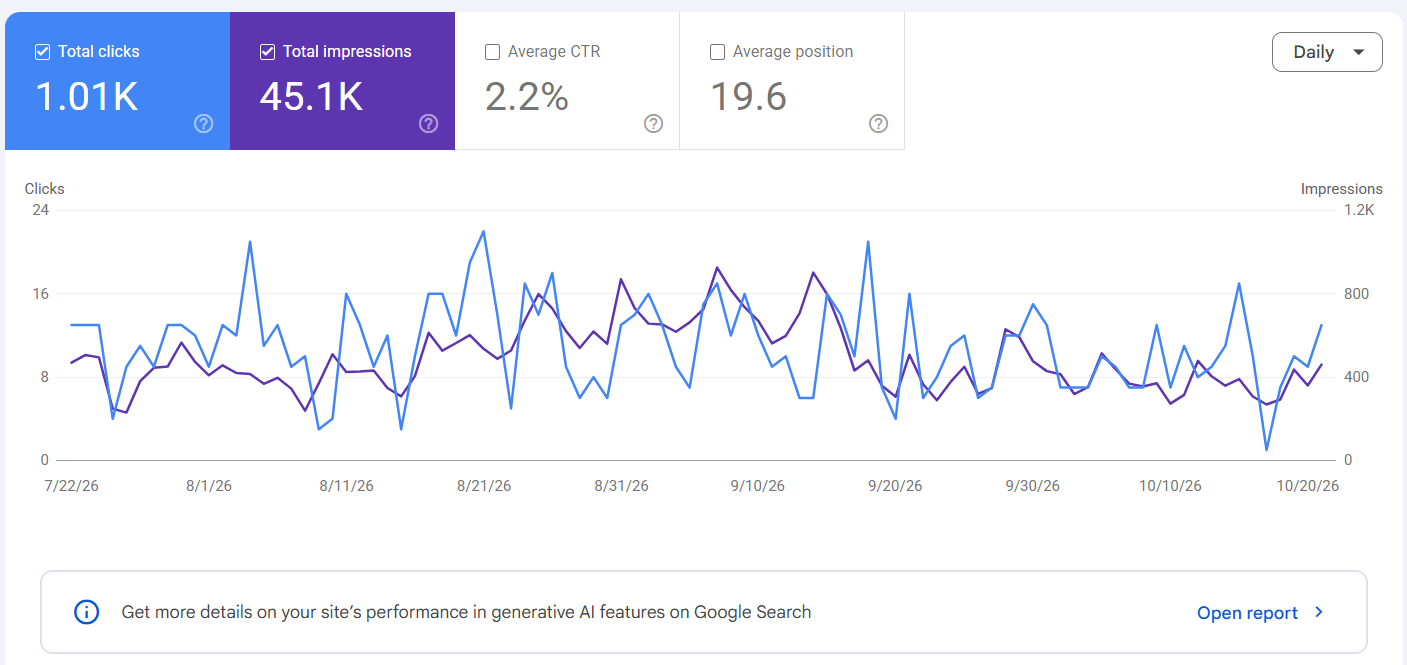
Google Search Console can help identify which queries and pages generate impressions and clicks. Its official performance report documentation explains how to analyse search performance.
Track Consideration
Look at what visitors do after arriving on the website.
Useful indicators include product-page visits from blogs, clicks on collection links, size-guide engagement, product exploration and movement from informational pages to commercial pages.
These actions help show whether content is helping parents evaluate the products.
Track Business Contribution
Where tracking is configured correctly, evaluate:
- Organic purchases and revenue
- Ecommerce conversion rate
- Assisted conversions
- Revenue from landing pages
- Returning customers
- Performance of content-supported campaigns
Not every blog will generate a direct purchase. Some content helps a customer discover the brand, while other pages support the final decision. Review these roles before deciding whether a page needs improvement.
Common Content Marketing Mistakes Kidswear Brands Should Avoid
Publishing Without a Clear Purpose
A calendar filled with generic parenting topics may generate activity without attracting relevant buyers. Prioritise topics connected to your products, customers and commercial goals.
Treating Every Platform the Same
A detailed blog, an Instagram Reel and a product page serve different purposes. Adapt the content to each format instead of copying the same message everywhere.
Ignoring Product Page Experience
Attracting visitors is only one part of the process. Missing size information, unclear fabric details, weak product photography or confusing delivery information can create hesitation even when the content performs well.
Making Unsupported Product Claims
Avoid broad statements about fabric safety, durability, comfort or suitability unless they can be substantiated. Accurate information is more useful to parents than exaggerated marketing language.
Measuring Success Only Through Engagement
Likes, shares and views can indicate interest, but they do not necessarily show commercial impact. Evaluate engagement alongside product exploration, qualified traffic and purchases.
What Can Kidswear Brands Learn From Growthify’s Client Work?
Growthify has worked with kidswear brands including Lil Drama, BabyBoo Shop and Kay and Que Kids. These brands provide relevant contexts for understanding how marketing needs can differ across children’s apparel businesses.
When developing a content strategy for a kidswear brand, the useful questions are:
- Which products and collections need more visibility?
- What information do parents need before purchasing?
- Which content formats best demonstrate the products?
- How can content support the website and paid marketing activity?
- Which customer actions should the strategy improve?
The specific strategy should reflect the brand’s products, audience, current website and documented marketing requirements. Any claims about individual projects, services delivered or business results should be based on the corresponding case study rather than assumed from the brand name.
Why Growthify?
Growthify approaches creative services as part of a broader growth strategy. For kidswear brands, that means connecting customer questions with search-led content, product and collection pages, social storytelling and relevant conversion paths.
The goal is not to keep publishing blogs because a content calendar requires them. It is to create content that helps parents discover the brand, understand the products and make more confident buying decisions. Content can also support SEO and paid campaigns by giving customers useful information at different stages of their buying journey.