Problem Statement
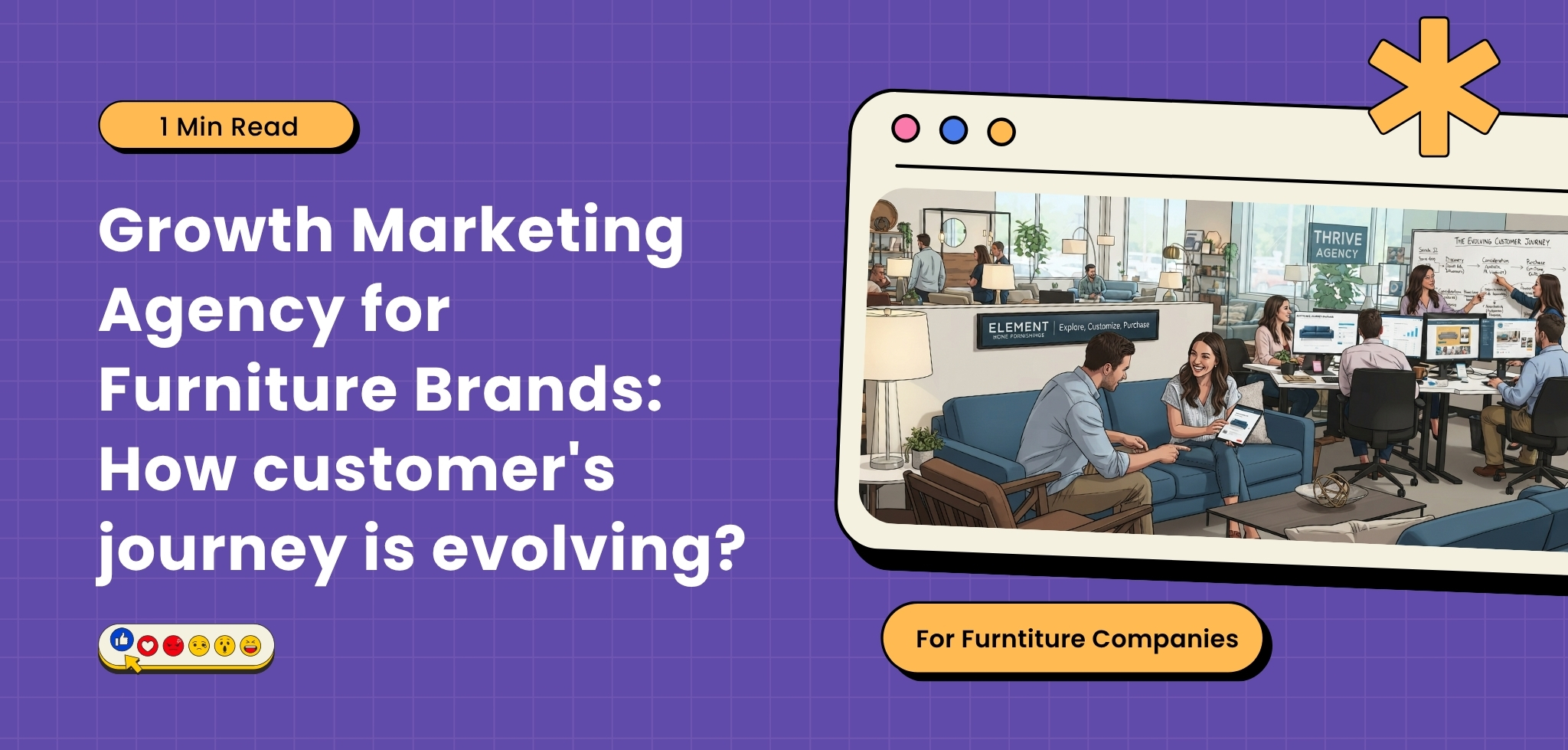
Furniture customers rarely make every purchase decision after seeing a single advertisement. They may discover a brand on social media, compare products through search, revisit a website, check dimensions and reviews, and then purchase online or contact the business. B2B buyers may follow an even longer journey involving specifications, samples, quotations, and internal approvals. When each marketing channel operates separately, brands can lose potential customers between discovery and conversion. A growth marketing agency for furniture brands should connect these touchpoints and help the business understand which activities contribute to qualified sales.
1. Understand How Furniture Customer Journeys Work
A customer journey is not always linear. A shopper might see a sofa on social media, search for similar designs later, read a buying guide, and return to the product page days afterward.
A B2B buyer may discover a supplier through search, review its product range, request a quotation, and consult colleagues before moving forward.
Plan for the main stages:
- Discovery: The customer becomes aware of a product, category, or supplier.
- Evaluation: The customer compares options, dimensions, materials, prices, and capabilities.
- Conversion: The customer buys, books an appointment, or requests a quote.
- Post-purchase: The business supports delivery, customer service, reviews, and future purchases.
Each stage needs suitable information, a relevant next step, and measurement that reflects the business model.
2. Connect SEO and Paid Advertising
SEO can help customers discover furniture products and suppliers through relevant searches. Paid advertising can capture existing demand or introduce products to new audiences.
For example, a shopper researching dining tables might discover a helpful guide through organic search, explore a collection, and later return through a paid campaign. A commercial buyer might search for an office furniture supplier and land on a B2B service page.
The strategy should coordinate:
- Keyword and audience research.
- Relevant service, product, and category landing pages.
- Campaign messaging aligned with page content.
- Accurate conversion tracking.
- Reporting that accounts for the customer journey.
Avoid assuming that every channel independently generated all the conversions attributed to it. Use analytics alongside business and sales data.
3. Use Creative to Answer Product Questions
Furniture creative should help customers understand the product, not only make it look attractive.
Useful creative concepts may show dimensions, finish options, materials, storage features, product use, or furniture within a realistic room setting. For B2B audiences, the creative may need to explain commercial suitability, available configurations, or project capabilities.
Test different product angles and messages while keeping the information accurate. Use results to improve creative and landing pages, rather than treating each advertisement as an isolated asset.
4. Improve the Website Journey
A growth strategy should investigate where visitors struggle to move forward.
For D2C websites, review:
- Product information and dimensions.
- Price, availability, and delivery details.
- Category navigation and product filters.
- Mobile usability and checkout friction.
- Return policies and customer support information.
For B2B websites, review:
- Clear service and product categories.
- Industries or projects served.
- Relevant specifications and customisation details.
- Easy access to enquiry or quotation forms.
- A clear explanation of what happens after an enquiry.
Prioritise changes based on observed behaviour, customer feedback, and conversion data.
5. Measure Growth Across the Customer Journey
Use metrics that reflect the objective at each stage.
|
Journey stage |
Useful measures |
| Discovery | Organic visibility, relevant visits, campaign reach |
| Evaluation | Product views, engaged visits, return visits, key content interactions |
| Conversion | Purchases, enquiries, appointments, quotation requests |
| Sales progression | Qualified leads, quote-to-sale rate, pipeline value |
| Retention | Repeat purchases, customer feedback, referrals where measurable |
Do not use a single metric to judge the whole journey. For example, a campaign with a higher cost per lead may still be valuable if it generates more qualified projects and stronger revenue potential.
6. Choose a Growth Marketing Partner That Fits Your Business
A suitable agency should understand your products, customer journey, sales cycle, and commercial constraints.
Ask how it will:
- Audit your current marketing performance.
- Identify gaps between discovery and conversion.
- Prioritise SEO, paid media, and creative work.
- Define success metrics and reporting.
- Test changes and document the results.
- Coordinate with internal sales, merchandising, and customer-service teams.
IAFA Furniture: Connecting Furniture Marketing With Business Goals
The IAFA Furniture case study provides a relevant reference for furniture brands evaluating how digital marketing can support business growth. It can help connect this guide’s discussion of customer journeys, marketing channels, and conversion opportunities with Growthify’s documented client work.
Explore the IAFA Furniture Case Study for the project’s specific approach and verified results.
How Growthify’s Growth Marketing Services Can Help Furniture Brands
Growthify‘s growth marketing approach can connect SEO, performance marketing, paid advertising, creative services, content, and conversion improvements around a brand’s business objectives.
The appropriate mix depends on whether the business prioritises online purchases, showroom visits, dealer enquiries, commercial projects, or multiple sales channels. A connected strategy should make it easier to understand how marketing activity contributes to qualified outcomes and where improvements are needed.