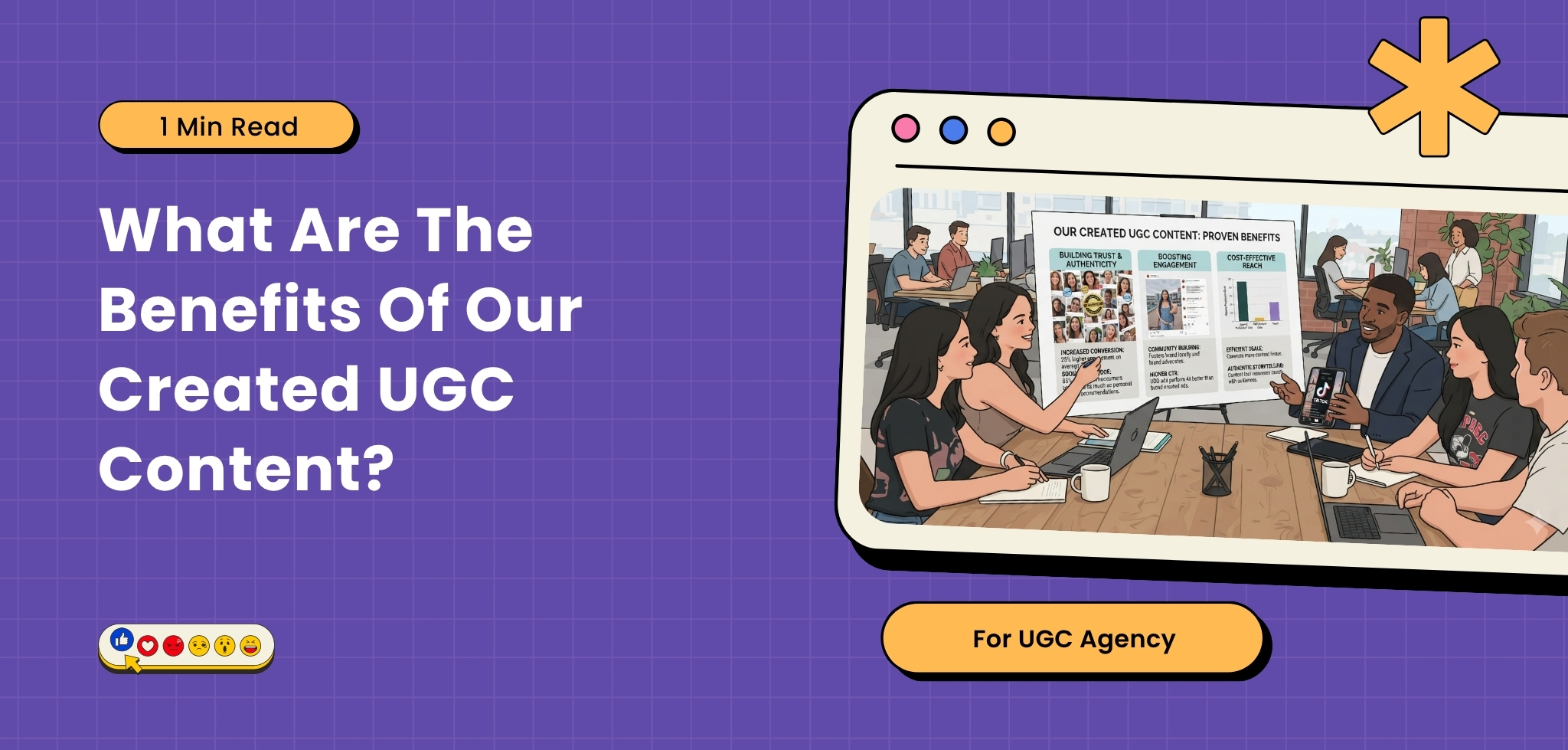
What Can UGC Content Actually Do for Your Brand?
Problem Statement
UGC is often sold as a simple way to make brands look more relatable. But that misses the bigger opportunity. The right UGC can demonstrate a product, answer an objection, explain a complicated service, show a real use case or make an unfamiliar brand easier to trust. The benefit also changes by industry. A jewellery brand may need styling and social proof, while a manufacturing company may need expert-led product education. At Studio FrameLabs, we create UGC based on the customer’s buying behaviour, not by forcing every industry into the same creator video format.
The Benefits of UGC Content Across 15 Industries
1. D2C & Ecommerce
For D2C brands, UGC can become a continuous source of performance creatives.
It can help with:
- Product discovery
- Social proof
- Product demonstrations
- Unboxing
- Objection handling
- New creative angles
- Meta Ads testing
- Retargeting
The biggest advantage is volume with variety. Instead of relying on one polished brand film, brands can test multiple ways of presenting the same product.
2. Jewellery
Jewellery customers often want to see the product beyond a studio photograph.
UGC can show:
- How jewellery looks when worn
- Styling ideas
- Gifting moments
- Unboxing
- Occasion-based stories
- Product details
- Personal reactions
For jewellery, UGC can make a product feel more tangible and relatable before someone decides to purchase.
3. Apparel & Fashion
Fashion is naturally suited to creator-led content because customers want to see how clothing actually looks on people.
UGC can demonstrate:
- Fits
- Styling
- Different body types
- Outfit combinations
- Fabric movement
- Occasion-based styling
- Try-ons
- Product reactions
This gives shoppers context that traditional product photography cannot always provide.
4. Furniture
Furniture is a high-consideration purchase.
Customers want to understand:
How will it look in my space?
How big is it?
Is it comfortable?
Does it actually look like the pictures?
UGC can bring furniture into real homes and show the product in a more natural environment.
5. Home & Decor
UGC can help home decor brands move from:
“Here’s our product.”
to:
“Here’s how this product changes a real space.”
Creators can show styling, room transformations, product placement, unboxing and everyday use.
This helps customers visualise the product in their own homes.
6. Home Improvement
For home improvement products, UGC can be particularly effective when it starts with a problem.
For example:
Problem → Product → Demonstration → Result
Useful formats include:
- Before and after
- Installation
- Product demonstrations
- Problem-solving videos
- How-to content
- Customer experiences
- Expert explanations
The product becomes easier to understand because customers can see it solving an actual problem.
7. Health, Wellness & Nutrition
Health and wellness products need trust.
UGC can make complex products easier to understand through:
- Product walkthroughs
- Usage demonstrations
- Educational content
- Customer experiences
- FAQs
- Routine-based content
- Founder or expert-led explanations
However, health-related claims need to be accurate and appropriately supported. UGC should never be used as a reason to make unsupported health claims.
8. Wearables
Wearables need to be experienced to be understood.
UGC can demonstrate:
- How the device is worn
- Daily usage
- Features
- Setup
- App experience
- Use cases
- Real-world convenience
A creator showing how a wearable fits into their day can communicate benefits much faster than a technical product description.
9. Eyewear
Customers buying eyewear want to know how it actually looks on a person.
UGC can help with:
- Try-ons
- Face-shape styling
- Product comparisons
- Lens explanations
- Lifestyle use
- Unboxing
- Outfit pairing
It helps reduce the gap between seeing a product online and imagining yourself wearing it.
10. FMCG
FMCG brands compete heavily for attention.
UGC can help demonstrate:
- Consumption occasions
- Product usage
- Taste or experience where appropriate
- Packaging
- Convenience
- Recipes or routines
- Product comparisons
- Everyday use
The content can make a product feel like part of someone’s routine rather than another advertisement.
11. Health Management Systems & Healthcare Technology
For healthcare technology and management systems, traditional consumer-style UGC may not always be appropriate.
Instead, creator-led or expert-led content can explain:
- How the software works
- Common operational problems
- Product workflows
- Features
- Benefits
- Implementation
- Customer experiences
Here, the value of human-led content is often simplification and trust, not entertainment.
12. EdTech
Students and parents want to understand the actual learning experience.
UGC can show:
- Student experiences
- Parent perspectives
- Course journeys
- Learning environments
- Tutor explanations
- Platform walkthroughs
- Common student problems
Instead of telling people that a course is useful, the content can show what the experience actually looks like.
13. B2B & Manufacturing
B2B UGC doesn’t need to look like traditional consumer UGC.
Think:
Engineer explaining an application
Founder explaining a business problem
Customer discussing a solution
Expert demonstrating a process
Employee explaining a technical product
The benefit is putting a human face behind a technical company.
That can make complex products and capabilities easier for potential buyers to understand.
14. Packaging
Packaging is specification-heavy, but UGC can still make the product more understandable.
Content can demonstrate:
- Packaging applications
- Unboxing experiences
- Material differences
- Customisation
- Printing
- Finishing
- Use cases
- Before and after packaging transformations
For B2B packaging companies, expert-led UGC can turn a technical offering into something prospects can quickly understand.
15. KPO, BPO & Professional Services
Service businesses have a different UGC opportunity.
You aren’t necessarily demonstrating a physical product.
Instead, content can show:
- Founder perspectives
- Expert explanations
- Client problems
- Process walkthroughs
- Employee expertise
- Common industry mistakes
- Customer experiences
- FAQs
The objective is to make an otherwise abstract service feel more human and understandable.
What Changes Across Industries?
The format changes.
The principle doesn’t.
A jewellery brand may need styling and social proof.
A furniture brand may need real-world demonstration.
A HealthTech brand may need education and trust.
A manufacturing company may need expert explanation.
An EdTech company may need student experience.
That’s why FrameLabs doesn’t start with:
“What UGC video should we make?”
We start with:
“What does the customer need to see before they take the next step?”
Why FrameLabs?
Studio FrameLabs creates UGC, performance ads, AI-assisted content, product shoots, ecommerce statics and other visual content using a research-led process. The team studies customers, competitors, reviews and market signals before developing creative angles, then produces content designed for actual advertising and customer acquisition. FrameLabs also works alongside Growthify’s performance marketing ecosystem, allowing creative ideas to be tested against real campaign performance rather than judged only by opinions.